Industrial Design
Digital Wallet
A card-sized e-ink ID holder that lets you carry digital credentials without carrying your phone.
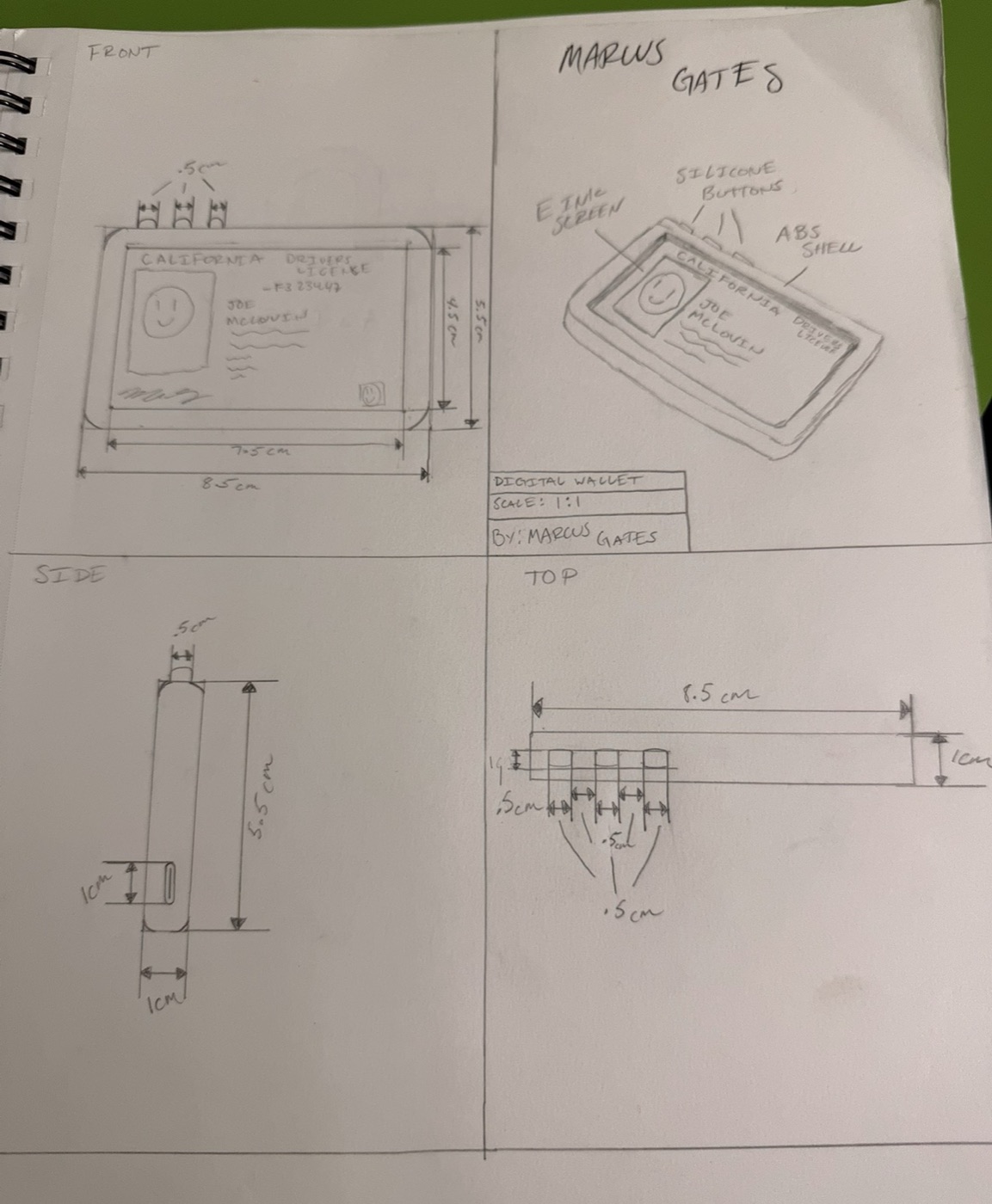
- SketchDimensioned four-view sheet at 1:1
- PrototypeFoamcore build that exposed three problems
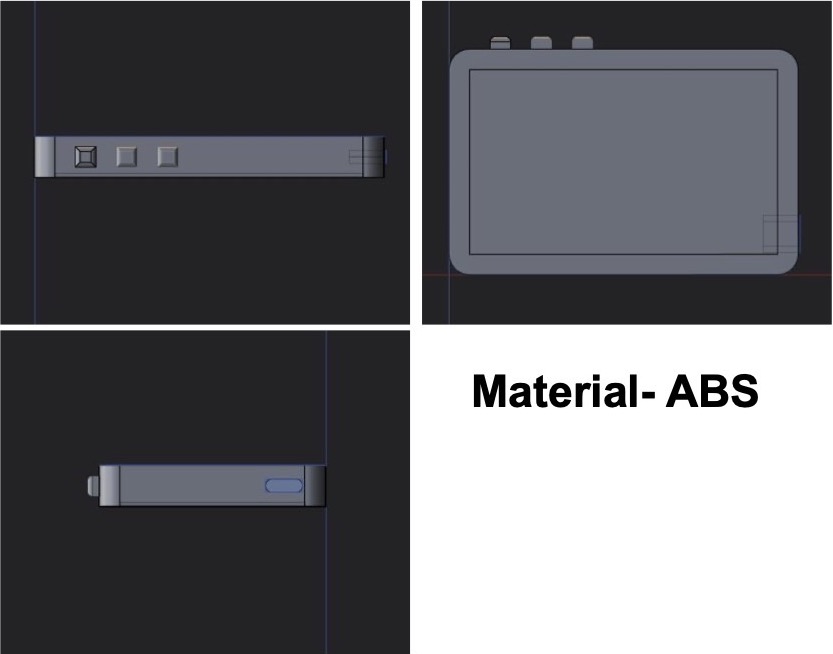
- CADModeled in Plasticity and exported to STL
- RedesignNext change: thin the profile by 6 mm
01 · Brief
Modern convenience, more analog life.
Most digital IDs and payment cards live inside a smartphone, which means every errand starts with a screen full of notifications. I wanted a separate, single-purpose object: a wallet-sized e-ink display that shows your ID, with three physical buttons to flip between cards.
The brief for the prototype was a real-size model with convincing proportions, so the critical work was getting the measurements right before building anything.
02 · Sketch
Dimensioned first, built second.
A four-view sheet at 1:1: front, isometric, side and top. It fixes the outside at 8.5 × 5.5 cm, the screen at 7.5 × 4.5 cm, 1 cm thickness and three 0.5 cm buttons spaced 0.5 cm apart along the top edge.
- Shell
- ABS (impact and scratch resistant, stiff enough for a thin wall)
- Display
- E-ink screen under a polycarbonate cover
- Controls
- Three silicone elastomer buttons, 0.5 cm
- Port
- 1 cm slot on the side edge
03 · Prototype
Foam board, hot glue and a placeholder ID.
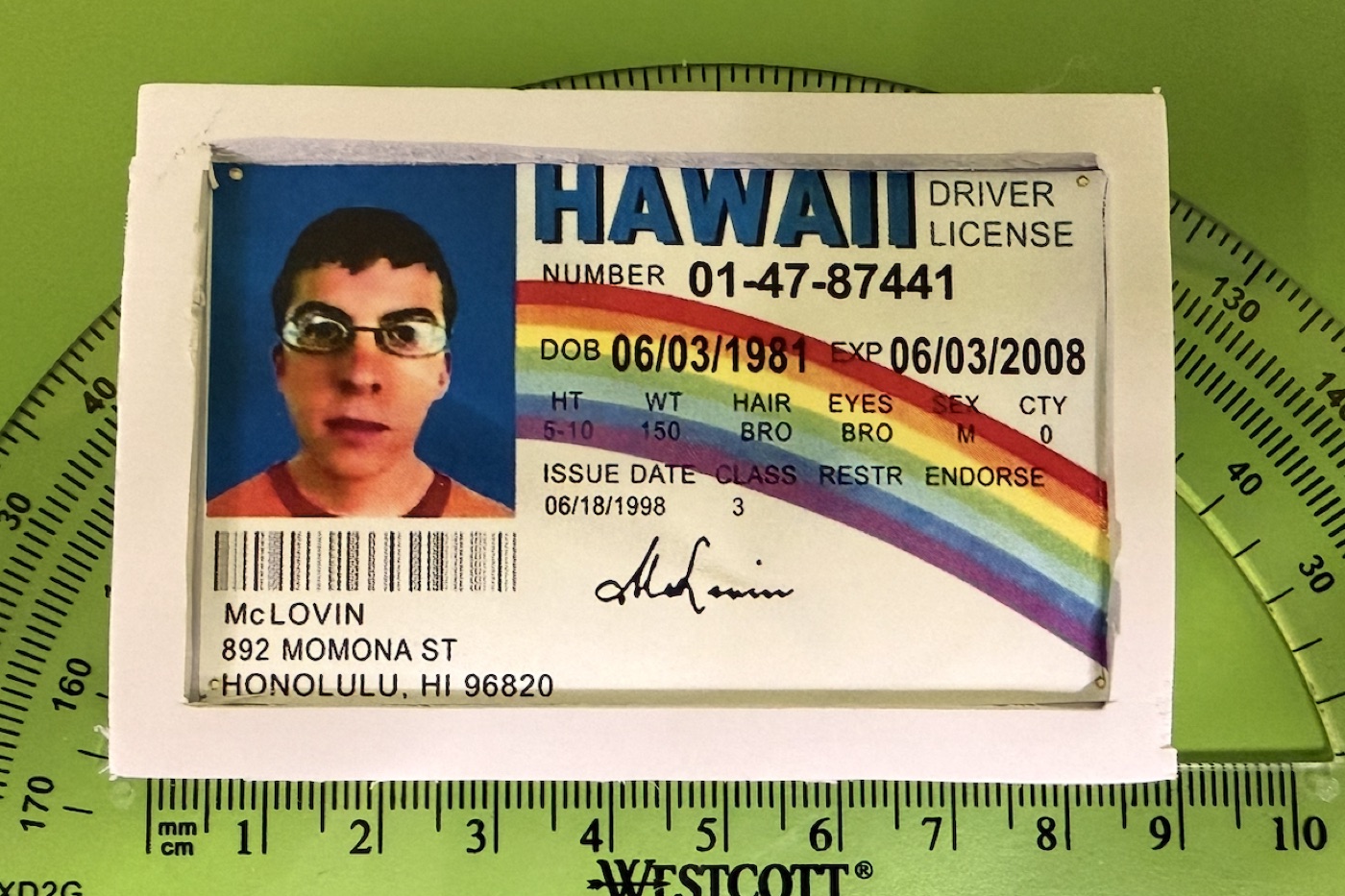
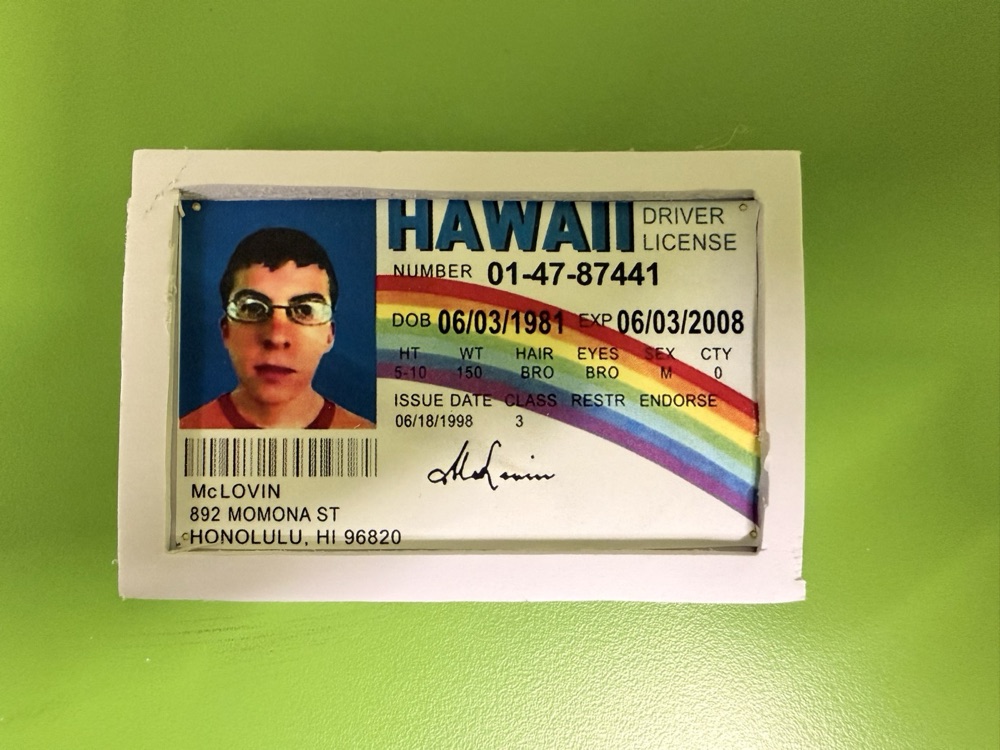
The first prototype is laminated foam board, with craft foam for the three orange buttons and a printed ID card at screen size (7.5 × 4.5 cm). Building it showed three problems the drawing never did.
What went wrong
- The top bezel delaminated along the foam layers because adhesive coverage was uneven.
- The outer frame bowed outward: the cut edge along the screen opening had no support.
- The top edge had to be recut twice so the three buttons stopped binding.
Next change
- Thin the profile by 6 mm to reach a true pocket-sized form factor.
- Move the layers to a molded ABS shell in the spec, so the frame is one rigid part rather than a laminate.
04 · CAD
Modeled in Plasticity.
With the sketch and the foamcore prototype as references, I rebuilt it as a solid model with rounded corners, a recessed screen opening, three raised button pads and a side slot. The model below is the exported STL: drag to rotate it.