Interaction · AR · Workplace safety
SightLine AR
A pre-trip inspection system for truck drivers. “Every mile starts here.”
- SurveyNine drivers on what gets in the way of inspections
- EvidenceLiterature on AR accuracy and usability
- PrototypeCardboard Wizard-of-Oz headset
- ConceptsThree hardware concepts sketched
01 · Problem
Pre-trip inspections are broken.
Before a truck rolls, the driver is supposed to inspect it. Under dispatch pressure, bad light and fatigue, that inspection gets rushed, and the people it protects, the driver and everyone on the road, pay for it.
78%
Under 10 min
of survey respondents complete inspections in under 10 minutes
6 of 9
Low confidence
drivers rated their confidence in catching problems 3 out of 5
5 of 9
Poor protection
say the current process “poorly” protects drivers and the public
How might we
help drivers conduct genuinely thorough inspections, even under time pressure, low light or limited experience?
02 · Research
What drivers told us.
I surveyed nine drivers about how inspections actually happen and what they would accept from new technology.
- Fatigue at the start of a shift
- 7 of 9 drivers
- Time pressure from dispatch
- 5 of 9
- Poor lighting in the yard
- 5 of 9
- Unfamiliar truck or equipment
- 2 of 9
89%
Open to new tools
rated their openness 4–5 out of 5
78%
Digital record
want a timestamped digital record
67%
Guided steps
want a guided checkpoint sequence
Key insight
77% rated automatic defect flagging as essential, and 89% of drivers are open to new technology, but only if it doesn't slow the workflow down.
03 · Evidence
AR works. The research is there.
A 2026 study by Cascone et al. in Computer Vision and Image Understanding shows AR systems can identify objects and anchor information to real surfaces reliably, and that people find the overlays usable.
97.1%
Accuracy
biometric accuracy
98.0%
Extraction
data extraction accuracy from complex sources
73.0
SUS score
a “Good” usability rating
The same study notes the gap that matters here: poor lighting degrades overlay robustness, which mirrors what drivers said about yard conditions.
04 · Prototype
A cardboard headset, a hidden laptop.
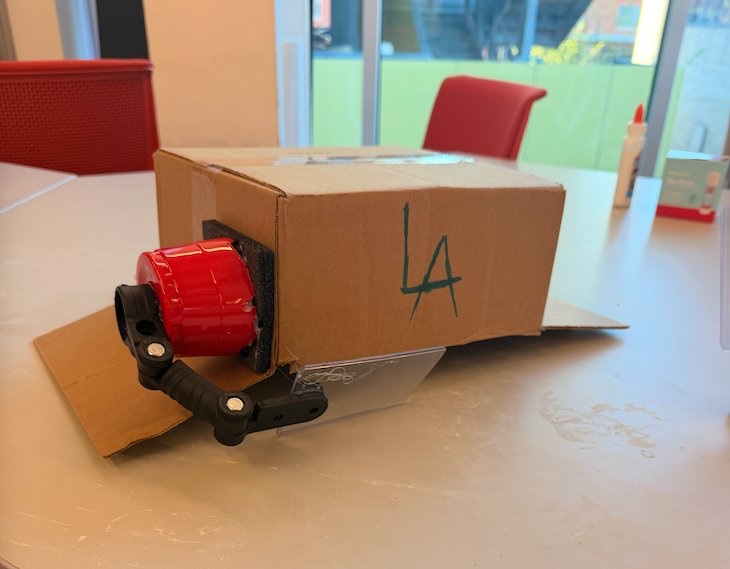
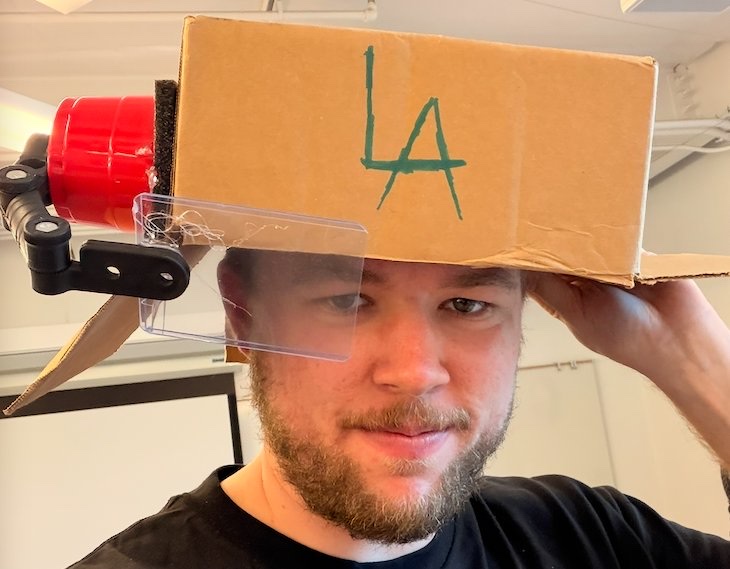
Early on, I built a Wizard-of-Oz prototype: a cardboard body with a camera mount and a transparent visor to simulate an AR headset's form factor. A facilitator, working a hidden laptop, triggers the overlays, so a driver can react to the idea before any software exists.
- Body
- Cardboard and camera mount, simulating an AR headset
- Display
- Transparent visor to simulate the AR overlay
- Control
- Operated by a facilitator from a hidden laptop
05 · Form factor
Three concepts for the hardware.
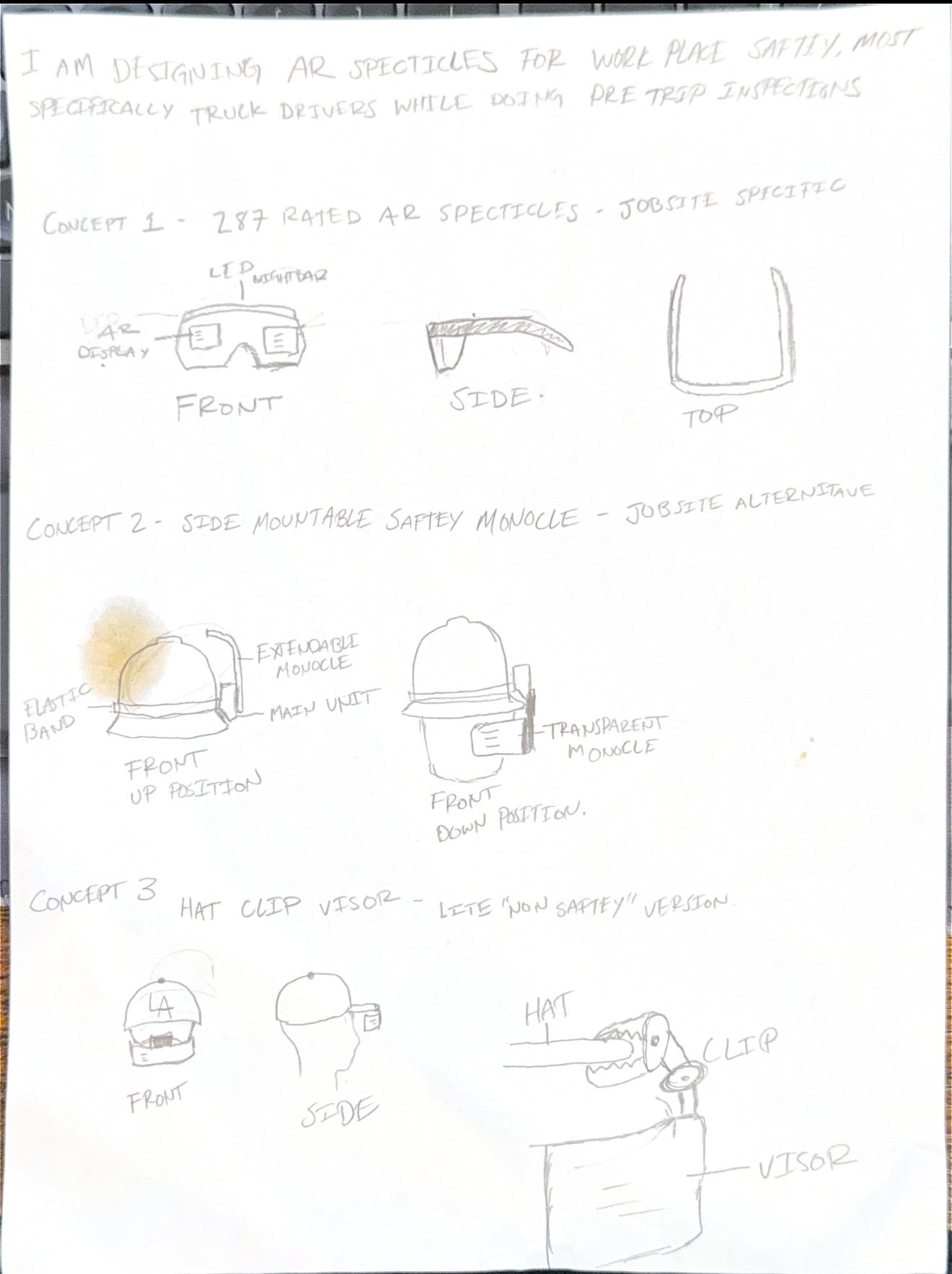
Z87-rated spectacles
A full-face AR display with an LED nightbar and a jobsite-certified safety rating. Binocular overlay for the widest field of view.
Side-mounted monocle
Clips to a hard hat on an elastic band. The extendable monocle flips up when not in use, with a transparent one-eye overlay.
Hat-clip visor “Lite”
A non-safety-rated version that clips to any cap bill: a compact visor for drivers outside hard-hat zones.
06 · Next
Where the research goes.
- Industry interviews
- 45–60 minute structured interviews with CDL-A drivers and fleet safety managers, synthesized into refined insight clusters.
- Wizard-of-Oz testing
- Facilitated sessions in a real freight yard: the driver wears the cardboard headset while the facilitator triggers checkpoint overlays from a laptop.
- Concept refinement
- Choose the final form factor (spectacles, monocle or visor) from session feedback, and define the guided walkthrough pattern for the digital prototype.