Interaction · Snap Design Academy 2024
Give Fund
A Snapchat feature that connects non-profits with the community, and lets people give with their own money or with coins earned by watching sponsored content.
- June 2024The nine-week Snap Design Academy begins
- Sprint · researchNon-profit interview, survey of about 60 people, persona
- Sprint · designIdeation, Give Coins, user flow and wireframes
- Five days outClickable prototype due and handed to engineering
- ShowcasePresented to C-suite, Snap employees and about 500 guests
01 · Challenge
Put non-profits on Snapchat in two weeks.
At Snap Design Academy our team was tasked with a Snapchat feature that integrates non-profits into the platform, which increases engagement and gives those organizations more exposure to the Snap community. We had two weeks to design and prototype it before presenting to C-suite executives, Snap employees, design faculty, and friends and family at a showcase.
As of April 2024 Snapchat had nearly 800 million monthly active users, so amplifying non-profit voices there could mean exposure for humanitarian causes far beyond what they reach today.
- Team
- Marcus Gates, Abigail Wynkoop and Jimmy Bryant (design), Marcos Banuelos and Eva Jopanda (storytelling), Cindy Andrade and Kyle Jussab (engineering)
02 · Research
Two kinds of people, one gap.
To understand the non-profit side I interviewed Charissa Kennedy of Kids in the Spotlight (KITS), which empowers foster youth through storytelling and filmmaking. Her biggest challenges were limited funding, accessibility barriers and low public awareness of foster youth experiences.
On the user side we ran an internal survey on interest in social causes, with around 60 participants, primarily Snap Academies alumni. It is a small, friendly sample, so I read it as a strong signal rather than proof. The data pointed to a gap: people want to help, and many cannot do it with money.
80.2%
Passionate
feel extremely passionate about supporting causes they believe in
97%
From home
would support non-profits from home if given the option
58.2%
Unable to give
are unable to provide financial support
That produced the how-might-we: create a fundraising feature for Snap users who cannot contribute financially but can still contribute remotely. The persona was Mariah, 21, a busy Los Angeles student who wants to support causes with more than money.
03 · Design
Sketch, flow, wireframe, prototype.
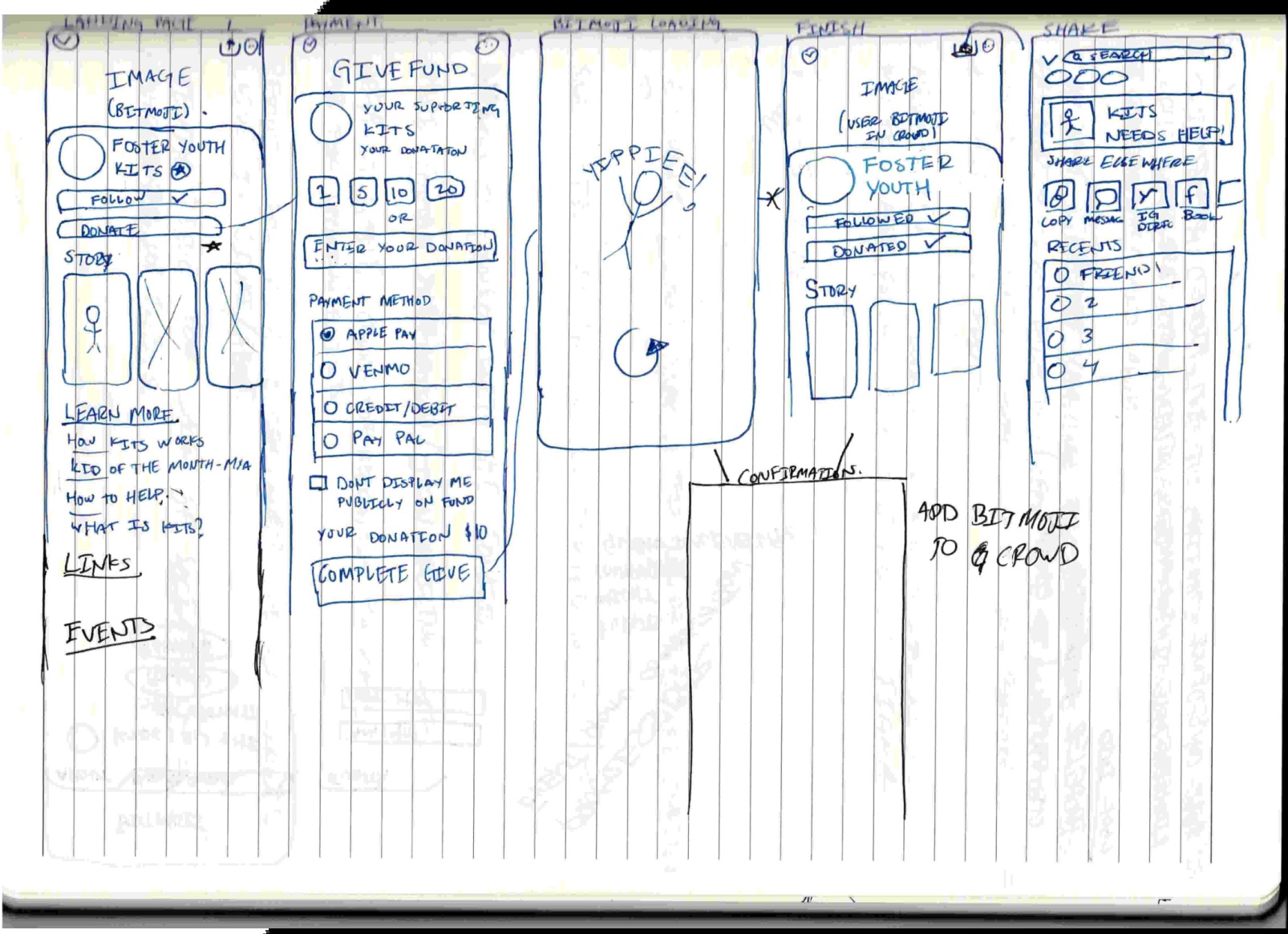
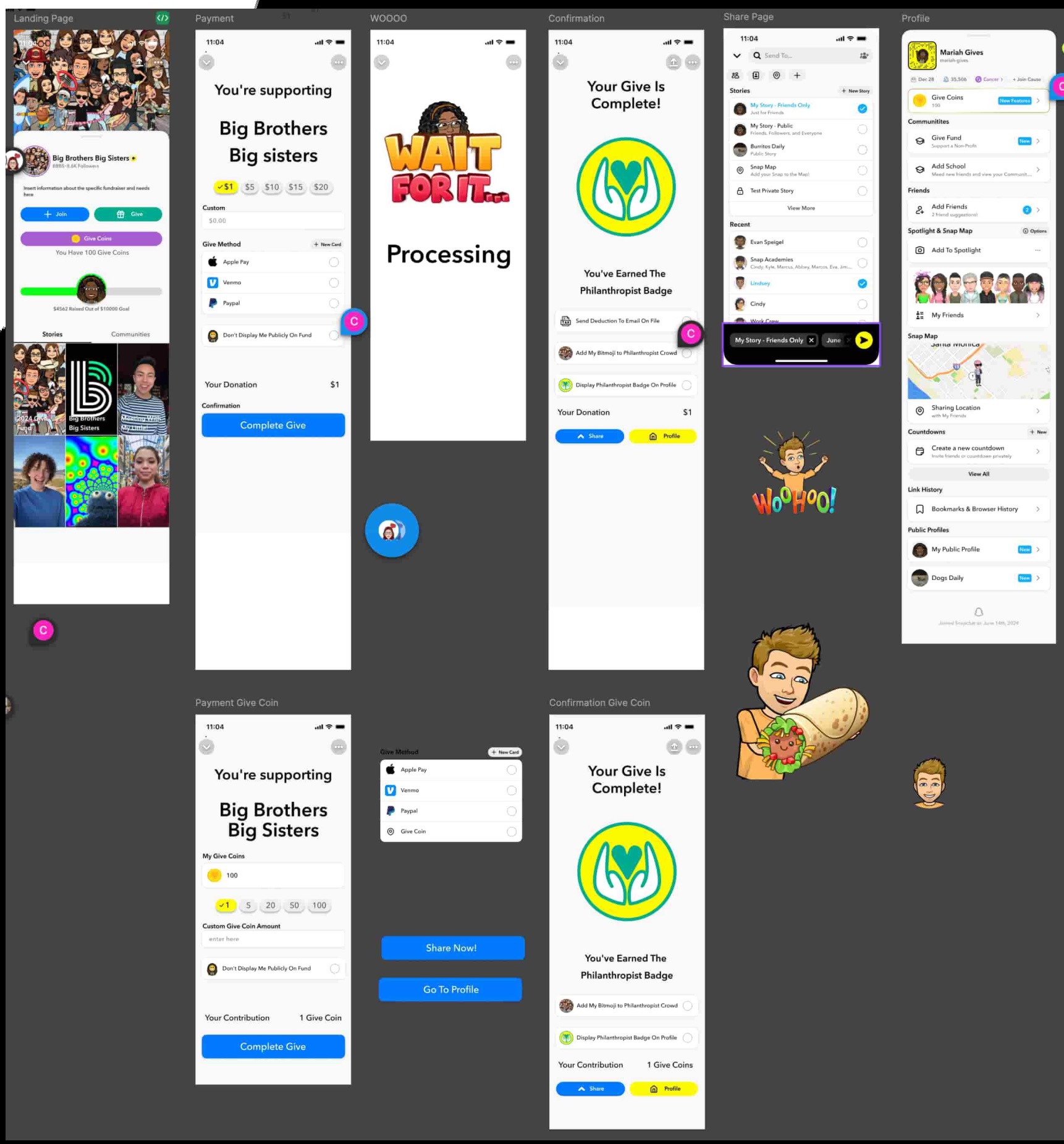
The team settled on Give Fund: non-profits ask for donations, and Snap users pay with their own money or with Give Coins, a currency collected by watching Snap-sponsored content. I took the interface, the user flow and the clickable prototype, working in Figma and Photoshop, and was the main contact for engineering to keep the result in Snapchat's design language.
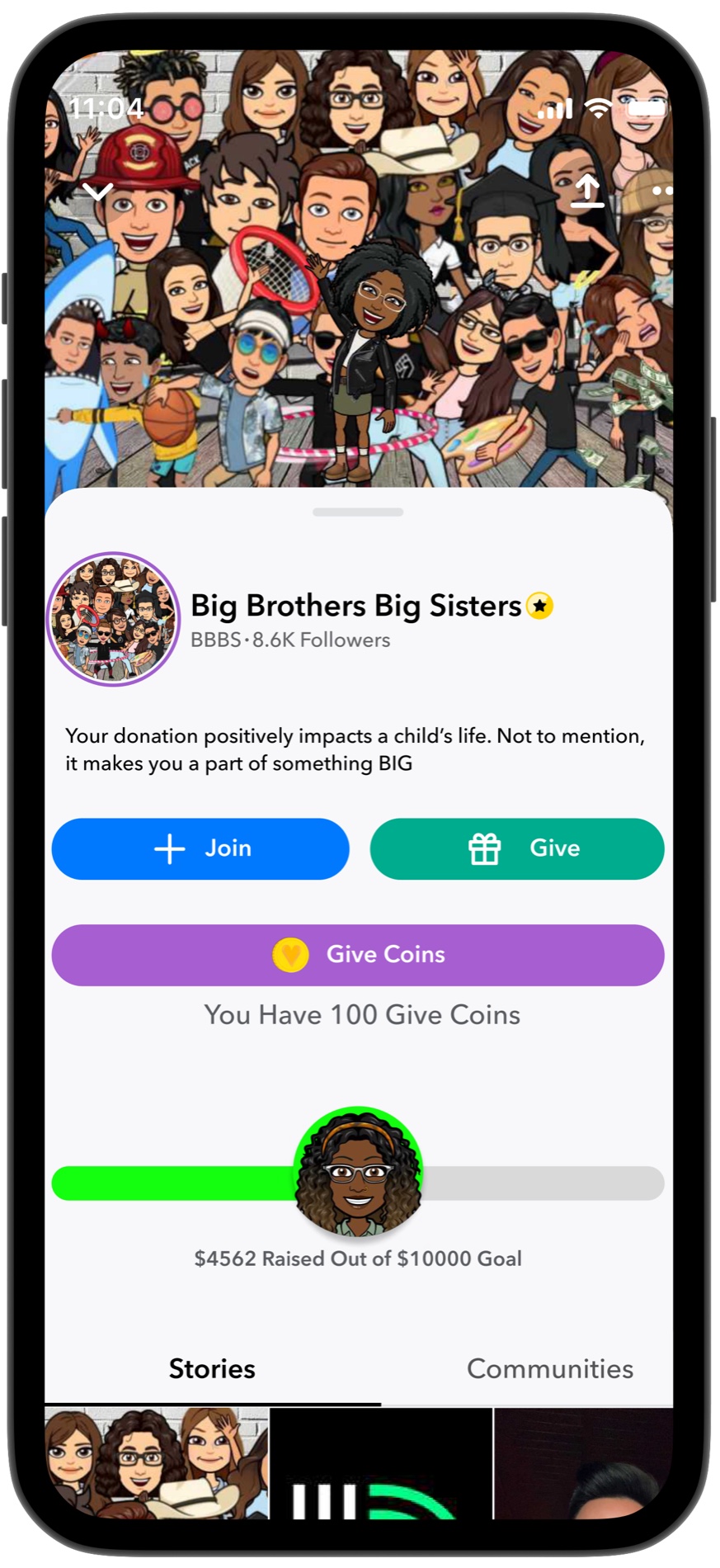
To make the page feel like a community, I proposed a dynamic Bitmoji crowd as the background, showing the people who have given.
My contribution · Give Coins
I introduced the Give Coin mechanic: an in-app currency that people earn by watching Snap-sponsored content and then donate to the cause of their choice. It answered the biggest gap in our research, that 58.2% of the people we surveyed couldn't give money, and it became the key feature of Give Fund: the mechanic the whole feature is built around.
FIG 1 · User flow: green boxes are screens or actions, diamonds are choices Mariah makes. Built from the Give Fund prototype.
04 · Results
Give with money, or with engagement.
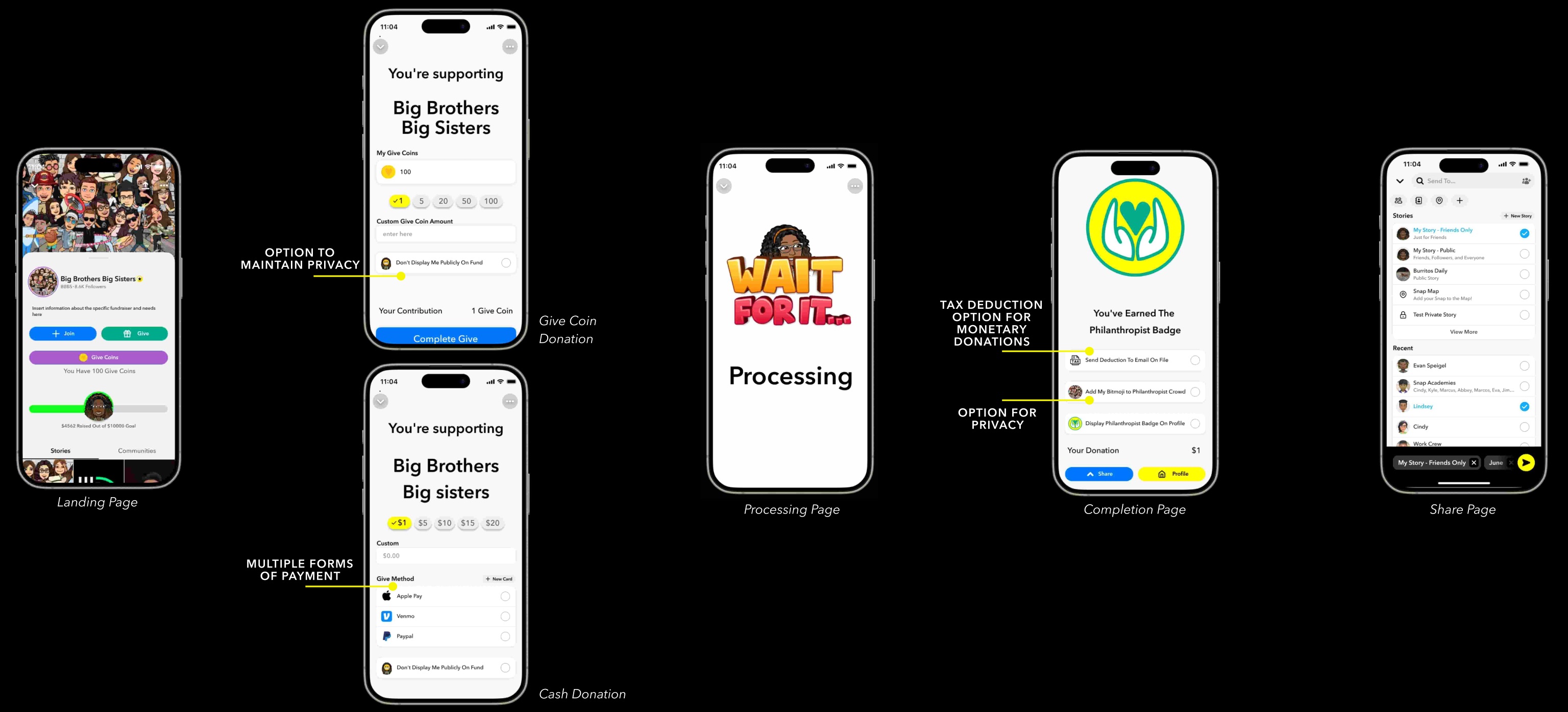
The final prototype has three ideas at the center. The Give Crowd embeds you in the community around a cause. Multiple donation options let people give cash or Give Coins, which addresses the nearly 60% who cannot give money. A progress bar shows need while promoting engagement. The conversion flow also offers privacy options, several forms of payment, and a tax-deduction option for cash gifts.
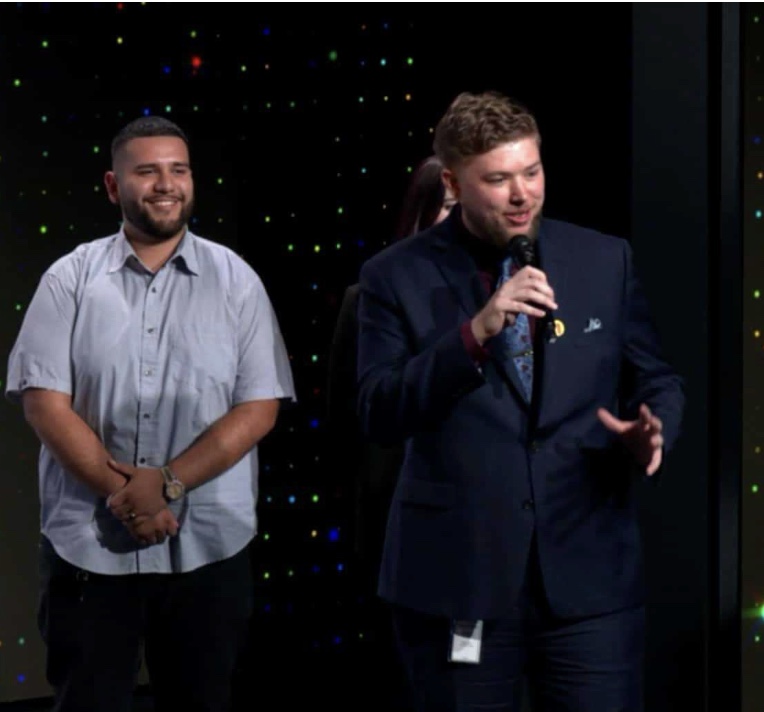
The showcase was a spectacle: I presented Give Fund on stage to C-suite executives and Snap employees, with about 500 people in attendance. Standing in front of a crowd that size, with a project my team had designed and prototyped in two weeks, was a rare opportunity, and it pushed me to tell the story of the design as clearly as I could.
Showcase
Snap employees and other Snap scholars responded well to the persona-led process, and there was significant interest in the Give Coin mechanic I introduced, which let users give based on their own engagement.
05 · Reflection
What I would change.
Worked
- Tight team collaboration under a two-week deadline.
- Time-blocking and the ABC method kept the work moving.
Next time
- More time for research: netnography, user journeys and a competitive analysis.
- Design the non-profit onboarding side, not only the giver side.
- Set milestones for research, ideation and design.